


Walk into any supplement store or scroll a wellness feed and you'll spot a cluster of alphabet-soup ingredients: NMN, NAD+, NR, Niacin, Niacinamide. They're all related to Vitamin B3, and they all touch the same core molecule your cells need to stay energized and repair themselves — NAD+ (Nicotinamide Adenine Dinucleotide).
But they are not the same thing. Their chemistry, bioavailability, side effects, and clinical evidence are different enough that choosing the wrong one could mean wasting money or missing real benefits. This guide breaks down every comparison you've been searching for in plain English.
The one-sentence summary
NAD+ is the goal, and Niacin, Niacinamide, NR, and NMN are roads to get there. Each with a different route, speed, and set of tolls.
The NAD+ Biosynthesis Pathway
Your body can't absorb NAD+ directly very efficiently. Instead, it assembles it from precursor molecules. Understanding where each compound sits on this chain explains everything.

Niacin and Niacinamide enter from the left — older, cheaper pathways. NR converts to NMN before becoming NAD+. NMN is one enzymatic step away from NAD+, making it the most direct dietary precursor.
Meet the Four Main Players
Before pitting them against each other, here's what each molecule actually is.
Vitamin B3 Form-1: Niacin aka Nicotinic Acid (NA)
Niacin, aka Nicotinic Acid, is the oldest and most studied form of vitamin B3. Niacin has been used since the 1950s to raise HDL ("good") cholesterol and lower triglycerides. It works via the Preiss-Handler pathway to produce NAD+. Famous (or infamous) for the niacin flush — a hot, tingly skin reaction that's harmless but uncomfortable. FDA-approved for cholesterol at high doses.
Vitamin B3 Form- 2: Niacinamide aka Nicotinamide (NAM)
Niacinamide is niacin's gentler cousin: the same B3 vitamin, but with a totally different pharmacological profile. It does not cause a flush. Widely used in skincare for brightening, pore minimizing, and anti-aging. It converts to NAD+ via the salvage pathway, but in high doses, it can paradoxically inhibit sirtuins (longevity proteins). A staple in dermatology.
3. NR (Advanced NAD Precursor)
Also Known As: Nicotinamide Riboside
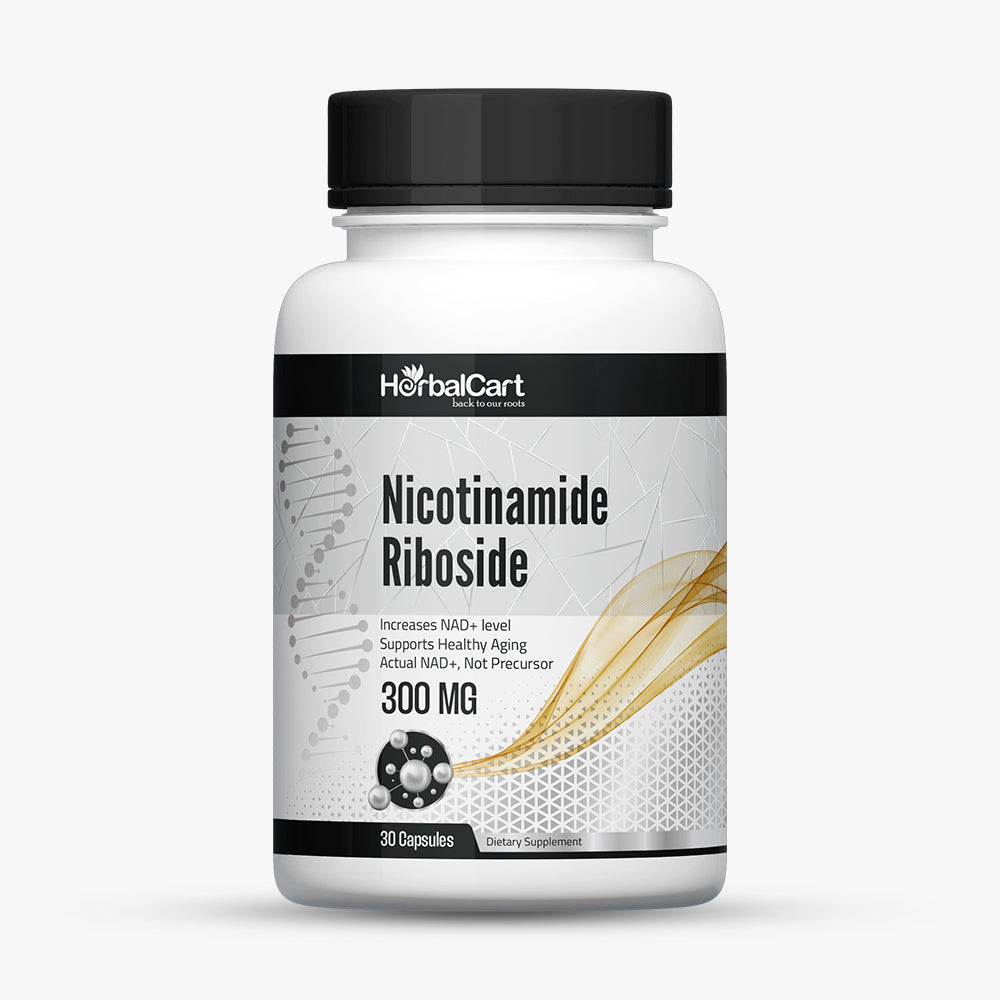
NR emerged in supplement form around 2013. It enters cells directly, gets converted to NMN, and then to NAD+. Human trials have confirmed it raises blood NAD+ levels. It's generally well tolerated with no flush. NR sits between niacinamide and NMN on the pathway — more targeted than Niacin, slightly less direct than NMN. Moderate cost, solid track record.
4. NMN (The Closest Direct NAD Precursor)
Also Known As: Nicotinamide Mononucleotide
NMN is the most direct dietary precursor to NAD+ — just one enzymatic step away. It gained massive attention after Harvard researcher David Sinclair published research on mouse longevity. Human trials show it reliably elevates NAD+ levels and may support energy metabolism, muscle function, and cognitive performance. It's the most premium option and the most researched for longevity.
Head-to-Head Comparisons
NMN vs Niacin — Is Niacin the Same as NMN?
No, they are not the same. This is one of the most common misconceptions. Niacin (nicotinic acid) and NMN (nicotinamide mononucleotide) are both Vitamin B3 derivatives, but they're structurally different molecules that take entirely different biochemical roads to NAD+.
Niacin is a simple, small molecule that's been used clinically for decades — primarily for lipid management. It causes a well-documented skin flush at doses above 50mg because it activates GPR109A receptors in skin cells. NMN does not do this. NMN is larger and more structurally complex, and it enters the NAD+ biosynthetic pathway at a much later stage — one step before NAD+.
If you're asking, "Can I take niacin instead of NMN to boost NAD+?" Technically, yes, your body will make some NAD+ either way. Still, the efficiency, side effect profile, and downstream effects are meaningfully different. NMN is more targeted. Niacin is cheaper and has cardiovascular benefits; NMN doesn't.
Bottom line
NMN vs Niacin: Both raise NAD+ but via different pathways. Niacin is better for cholesterol; NMN is better for targeted NAD+ elevation without a flush.
NMN vs Niacinamide — Nicotinamide Mononucleotide vs Niacinamide
Niacinamide (NAM) is often confused with NMN because both lack the flush and both share the "nicotinamide" root in their names. But chemically, they're distinct. Niacinamide is the simplest form of B3 after niacin — a tiny molecule, widely available, and inexpensive. NMN is a nucleotide; structurally larger, with a ribose sugar and phosphate group attached.
Niacinamide converts to NAD+ via the salvage pathway, which is efficient at lower tissue concentrations. However, at high supplemental doses, niacinamide can inhibit PARP enzymes and sirtuins — proteins central to DNA repair and longevity — which is the opposite of what you want from a longevity supplement.
NMN doesn't have this concern at typical doses. It converts more directly and cleanly to NAD+ without the sirtuin-inhibition issue. For skincare and general B3 support, niacinamide wins on cost and convenience. For cellular energy and anti-aging goals, NMN is in a different league.
NMN vs NR (Nicotinamide Riboside)
This is the most technically nuanced comparison. NR and NMN are very closely related — in fact, NR must be converted to NMN inside cells before becoming NAD+. So which is better to take?
The debate in longevity science centers on bioavailability and cellular uptake. NMN is larger and was originally thought to require conversion to NR before entering cells. However, research identified a specific NMN transporter (Slc12a8) in mouse intestines that allows direct NMN uptake. Whether this applies robustly in humans remains under study. Human clinical trials on both compounds show NAD+ elevation — neither has a definitive advantage based on current evidence, though some researchers prefer NMN for its proximity to NAD+.
Niacin vs NAD+ — Are They the Same?
Definitely not. NAD+ is the final product; niacin is one of several precursors used to make it. Taking niacin provides your cells with the raw materials to synthesize NAD+. Taking NAD+ directly faces a key challenge: NAD+ molecules are large and charged, making absorption through the gut wall and into cells inefficient. Most oral NAD+ supplements are largely broken down before they reach your bloodstream intact. This is why precursors like NMN and NR are considered more effective delivery vehicles.
The exception is IV NAD+ therapy, where the molecule bypasses the gut, but that's clinical, expensive, and time-intensive. For most Americans, the precursor route (NMN, NR, or even niacin) is far more practical.
Niacinamide vs NAD+
Same principle: niacinamide is a building block, not NAD+ itself. Niacinamide converts to NAD+ through a 3-step salvage pathway. It's the most widely used B3 form in food fortification and is found naturally in meat, fish, and legumes. For topical skincare, niacinamide works through completely different mechanisms than NAD+. For systemic NAD+ elevation as a longevity goal, high oral doses of niacinamide are less targeted and carry the caveat of sirtuin inhibition mentioned above.
NMN vs NAD+ vs NR — The Triple Comparison
If you've seen "NMN vs NAD+ vs NR" as a search, here's the concise answer: NAD+ is the destination; NMN and NR are the vehicles. Between the vehicles, NMN is one step closer to NAD+ than NR. All three are supported by human clinical data showing elevated NAD+ levels. The practical differences come down to cost, bioavailability research, and individual response. Many longevity-focused Americans take NMN, with some stacking it with other compounds. To learn more about timing your intake correctly, check out this guide on the best time to take the NMN supplement.
The Complete Comparison Table
Side-by-side on every factor that matters.
| Factor | Niacin (NA) | Niacinamide | NR | NMN |
|---|---|---|---|---|
| Chemical name | Nicotinic Acid | Nicotinamide | Nicotinamide Riboside | Nicotinamide Mononucleotide |
| Steps to NAD+ | 3–4 steps | 3 steps | 2 steps | 1 step |
| Causes flush? | ✗ Yes | ✓ No | ✓ No | ✓ No |
| Cholesterol effect | ✓ Strong | ✗ None | ✗ None | ✗ None |
| NAD+ elevation | ✓ Moderate | ✓ Moderate | ✓ Good | ✓ Excellent |
| Sirtuin safe? | ✓ Yes | ⚠ High-dose risk | ✓ Yes | ✓ Yes |
| Longevity research | ✗ Limited | ✗ Limited | ✓ Moderate | ✓ Extensive |
| Skincare use | ✗ No | ✓ Excellent | ✗ No | ✗ No |
| Cost (typical) | $ Low | $ Low | $$ Medium | $$$ Premium |
| Human trials | ✓ Decades | ✓ Decades | ✓ Several | ✓ Growing |
Who Should Take Which?
There's no universal winner. Here's how to match the molecule to the goal.

You should consider NMN if
-
You're over 40 and experiencing energy decline — NAD+ levels drop roughly 50% between your 20s and 50s, and NMN is the most direct way to address that.
-
You want the longevity benefits without the flush, sirtuin inhibition risks, or cholesterol effects of niacin/niacinamide.
-
You follow health optimization protocols and want a supplement backed by serious peer-reviewed research (not just animal studies).
-
You're looking for a premium, research-backed option — this NMN supplement is a solid place to start.
Stick with Niacin if
Your doctor has recommended it for cardiovascular reasons — specifically, to raise HDL or lower triglycerides. At therapeutic doses (1,000–2,000mg under supervision), niacin has a decades-long track record for lipid management that NMN simply doesn't have. Extended-release niacin reduces the flush significantly.
Niacinamide is ideal if
You want general B3 support, anti-inflammatory benefits, or you're using it topically for skin. It's also used at doses of 500mg to support blood sugar regulation and has been studied for the prevention of type 1 diabetes. Just keep systemic doses under about 3g/day to avoid the sirtuin-inhibition effect.
Safety, Side Effects & What to Watch For
Important note
All four compounds are generally recognized as safe at standard doses. Consult a healthcare professional before starting any supplement, especially at higher doses or if you're on medications.
Niacin Side Effects
The niacin flush is the most talked-about side effect — a prostaglandin-mediated skin reaction causing redness, warmth, and tingling. It's harmless but can be alarming if unexpected. Taking aspirin 30 minutes before or using slow-release niacin dramatically reduces it. At high doses, niacin can cause liver strain, increased uric acid (gout risk), and blood sugar elevation — all reasons it should be medically supervised above 500mg/day.
Niacinamide Side Effects
Generally very well tolerated. Topically, rare irritation in sensitive skin. Orally, high doses (3g+) have been associated with nausea and, theoretically, sirtuin inhibition. It does not cause a flush. Oral doses for general wellness (250–500mg) are considered very safe.
NR Side Effects
Human trials have found NR to be well-tolerated at doses up to 2,000mg/day. Minor reports of nausea or headache at very high doses. No flush. No significant liver concerns at standard supplementation doses.
NMN Side Effects
Human studies to date show NMN is well tolerated. One Japanese study (Irie et al., 2020) found that 500mg/day oral NMN was safe and well-tolerated in healthy men: no flush, no liver signals, no significant adverse events at standard doses. As with any supplement, the product's quality and purity matter significantly.
References
- Irie J et al. Safety and efficacy of NMN in healthy adults (2020).
- Yoshino J et al. NMN supplementation and metabolic health (2021).
- Martens CR et al. Chronic Nicotinamide Riboside Supplementation (2018).
- Trammell SAJ et al. Nicotinamide Riboside is uniquely available (2016).
- National Institutes of Health (NIH) Office of Dietary Supplements – Niacin Fact Sheet.
The Final Takeaway
The B3 family of molecules — niacin, niacinamide, NR, and NMN is related but not interchangeable. They each have a different place on the biochemical map and a different role in your supplement stack:
Niacin is the cardiovascular workhorse. Niacinamide is the skincare and general B3 standby. NR is a well-studied NAD+ precursor with a solid track record. And NMN is the most direct, most research-supported route to boosting NAD+ for cellular energy, DNA repair, and the growing body of research on longevity.
If you're in the US and researching NAD+ supplementation for healthy aging, the conversation almost always comes back to NMN — and how to take it correctly matters as much as what you take. For a practical primer on timing and dosing, the best time to take NMN supplement guide covers the protocols backed by current research.