


"Stress is the pill to slow death. It'll not only take away the essence of your personality but also the reason to have it."
Stress and anxiety have been eating the generation at the cost of sanity. Stress doesn't only affect one person. It also affects their family, and it takes a toll at work, in studies and in everyday relationships.
The good news is that you are not powerless. This guide walks you through the symptoms of stress, six natural remedies for stress, quick relief techniques for tense moments, the foods that support a calmer body, and clear signs that it is time to talk to a professional. Take what suits you and leave the rest.
Quick answer: how to reduce stress naturally
Meditate or breathe slowly, move your body, sleep at least 7 hours, spend time on activities you enjoy, stay connected with supportive people, and eat balanced meals. Herbs and supplements may help some people, but evidence is mixed and they can interact with medicines, so talk to a doctor or pharmacist first.
What Is Stress and What Causes It?
Stress is your body's natural response to pressure or a perceived threat. When something feels demanding or out of your control, your brain releases hormones such as adrenaline and cortisol. Your heart beats faster, your muscles tighten and your senses sharpen. This "fight or flight" response is useful in short bursts, for example when you need to meet a deadline.
The trouble starts when the alarm never switches off. Weeks or months of ongoing pressure can wear you down, mentally and physically. Common causes include heavy workloads, money worries, relationship conflict, health concerns, the loss of a loved one, and major life changes. What stresses one person may barely affect another, because genetics, past experiences, support and living conditions all shape how we react.
Signs and Symptoms of Stress: Do You Have It?
You must introspect for symptoms that could be telling the truth about your health. Aren't sure if you are dealing with stress or not? Go through the list before getting it confirmed by a doctor. These symptoms can also have medical causes, so this list is not a diagnosis.
Physical Symptoms of Stress
- Fatigue & nausea
- Constant headache turning into migraine
- Change in appetite with irregular hunger pangs
- Muscle tension and heavy chest
- Upset stomach & pain in abdomen
- Dwindling sexual desires
- Teeth grinding
- Hormonal imbalances giving rise to health problems
If you have chest pain, trouble breathing or sudden severe symptoms, get emergency medical care immediately.
Mental and Emotional Symptoms of Stress
- Lack of interest & concentration
- Irritability & frustration
- Constant need to quit job, school or college
- Lethargy
- Anxiety attacks
- Confusion due to cloudy conscience
- Feeling of being alone
If you ever feel hopeless or have thoughts of harming yourself, please talk to a doctor or a trusted person right away, or contact your local emergency services or a crisis helpline.
Why Ongoing Stress Should Not Be Taken Lightly
These symptoms have wider wings to affect one's life. Check out the impacts that on-going symptoms can have and why not to take it lightly:
- Disturbed personal and professional life
- No social circle or friends to row you through the stressful situation
- Improper sleep pattern leading to insomnia
- Stress can invite depression to set in
- Work and money issues take toll
- Falling prey to health problems
Stress is never chosen by a person. However, there are ways to cope with its psychological and physiological troublesome effects.
How to Reduce Stress Naturally at Home
How can you sit at home and annihilate stress without going out of the way?
It's all about training your mind and replenishing your body with healthy thoughts and nutrients at the end of the day. Right food and thoughts can make a real difference to your life. Natural doesn't always mean risk-free, so we have added safety notes where they matter. Investigate the following natural remedies for stress:
6 Natural Remedies for Stress
1. Meditate for Natural Stress Relief
Often times people question that meditation is not possible in a stressed situation. But the beauty of meditation is that you can standstill and get your mental sanity back any time you want. Stress occurs when you force your inner self to put your energies into something you don't like to do. Say, a job of an IT engineer when you want to be a photographer. Meditation will set your energies free for a while. The moment you sit for yourself, no external force, boss or energy will rule over you. You'll feel the radiation of your inner self and may also get the answer of the long lost question that your conscious mind is fighting not to answer.
How to start a simple meditation routine:
- Choose a quiet spot and sit comfortably with your back supported.
- Close your eyes and breathe in through your nose for 4 seconds.
- Breathe out slowly for 6 seconds.
- When your mind wanders, which it will, gently bring your attention back to your breath without judging yourself.
- Begin with 5 minutes a day and add a minute or two each week.
Research suggests mindfulness practices may help reduce stress and anxiety for many people, although results vary. Guided audio recordings and apps make it easier for beginners. Meditation can also bring up difficult feelings. If it leaves you feeling more anxious, stop and speak with a therapist.
2. Involve Yourself in Your Favorite Activity
Akin to meditation, involving yourself in your favorite activity will only make you feel right about the moment. It will put your mind off from the stressor and help you focus on the constructive side of your personality. You may get engrossed into creating something so that the feeling of being useless dies.
The activity does not need to be impressive or productive. Painting, cooking, gardening, playing music, writing, photography, knitting or simply building something with your hands all count. Psychologists often describe a state of "flow," when you are so absorbed in a task that you lose track of time. Spending time in that state gives your stress response a chance to settle. Put it on your calendar like any other appointment, even if it is only 15 minutes a day, and protect that time from interruptions. If your job leaves little room for creativity, a small hobby can bring back the sense that you are more than your responsibilities.
3. Aroma Massage to Ease Muscle Tension
Stress plays with your muscles. Rooted in traditional practices such as Ayurveda and Chinese medicine, warm oil massage on the active points may improve blood circulation. This can help ease muscle tension and support healthy blood pressure. Gradually, aroma therapy and massage can help lower stress levels. They are relaxation aids, not a medical treatment. If you are pregnant, have skin allergies or a medical condition, check with your doctor before using essential oils.
If you cannot visit a professional, try a few minutes of self-massage. Warm a little carrier oil, such as sesame or coconut, in your hands and use slow, firm strokes on your neck, shoulders, hands and feet. A warm bath or a cloth soaked in warm water placed on tight shoulders can also help. Calming scents such as lavender are popular, and some small studies link lavender aroma with reduced anxiety and better sleep. Always dilute essential oils in a carrier oil before they touch your skin, and stop if you notice irritation.
4. Exercise and Workouts to Lower Stress
Whether you're zumba, yoga, gym or aerobics person; the aim is to make your body move. Stress can leave you feeling sluggish, but routine exercise can help lift that heaviness. The Physical Activity Guidelines for Americans suggest adults aim for 150 to 300 minutes of moderate activity a week. To be noted here that you should enroll into what you enjoy, else it can backfire. If you have a health condition, check with your doctor before starting.
Exercise helps by burning off stress hormones, releasing endorphins and improving sleep. You do not need a gym membership or an intense routine to feel the benefit. A brisk 10-minute walk after meals, a short yoga sequence in the morning, dancing in your living room or cycling to the shop all count. If you are new to exercise, start with 10 minutes a day and add a little each week. Choose a time of day when you have the most energy, and keep a friend or family member in the loop so that you can encourage each other. On very stressful days, gentle movement such as stretching or walking is often more realistic and just as useful as a hard workout.
5. Don't Force Yourself Into What Others Say
Your loved ones may be highly concerned about your health but their suggestions might not always make you feel good about yourself. If you want to socialize, do so but not on someone's advice. Avoid everything that is forced on you. Just try not to cut yourself off completely: keep at least one or two people you can talk to honestly.
Setting boundaries is a healthy part of stress management. You can thank people for caring and still decide what is right for you. Try phrases such as "I appreciate your concern, and I will think about it" or "I would rather not talk about that today." At the same time, strong social support is one of the best protections against stress, so choose company that leaves you feeling calmer, not judged. Even a short call or a walk with someone you trust can lighten the load. If you do not have anyone to talk to, consider a support group or a counselor.
6. Eat Right to Feel Right: Foods That Help Reduce Stress
Your body is amalgamation of good nutrients which are spoiled by bad food that you take daily like trans fats and stubborn carbs. To give your body a good back up of healthy food that helps to reduce stress, include the given in your diet:
- Chamomile: It is best ingested as tea. Chamomile may help relax muscles, support sleep, ease anxiety and soothe stomach discomfort. People allergic to ragweed may react, and it can interact with blood thinners.
- Valerian: Valerian root is often used for sleep and anxiety, although research results are mixed. It can cause drowsiness, may interact with sedatives, and is not advised in pregnancy. Talk to a doctor or pharmacist before using valerian tea or supplements.
- Berries: Blueberries, strawberries, blackberries, and other berries give in vitamin C and antioxidants which imparts positive health benefits.
- Dark Chocolate: Full of healthy fat and two of most important antioxidants – polyphenols and flavonols – dark chocolates are the sinful indulgences which you'll always love. Enjoy in moderation, as it also contains sugar and calories.
- All Nuts: Walnuts, cashews, almonds and others are highly rich in essential nutrients like proteins, fats, magnesium and calcium. Walnuts are a good plant source of omega-3.
- Turkey Breast: It contains tryptophan, amino acid, which the body uses to make serotonin. Serotonin, a neurotransmitter, is involved in regulating mood. One food won't change your mood overnight, but protein supports steady energy.
Beyond these foods, the overall pattern of your diet matters more than any single item. Build your meals around vegetables, fruit, whole grains, beans, fish and lean protein, in line with the Dietary Guidelines for Americans. Eat at regular times, because skipped meals and sugar crashes can make you feel more irritable and anxious. Drink enough water, and go easy on caffeine and alcohol. The FDA notes that up to about 400 mg of caffeine a day (roughly four cups of brewed coffee) is generally not linked with negative effects in most healthy adults, but sensitivity varies, and caffeine late in the day can disturb sleep. Alcohol may feel relaxing at first, but it fragments sleep and can worsen anxiety the next day.
Before you take any herbal supplement:
- Talk to your doctor or pharmacist if you take any medicine, are pregnant or breastfeeding, or have a medical condition.
- Choose products tested by an independent third party, such as USP Verified or NSF Certified.
- Do not use supplements in place of therapy or prescribed medicine.
- Stop and seek care if you notice a rash, yellowing of the skin or eyes, or severe stomach pain.
-
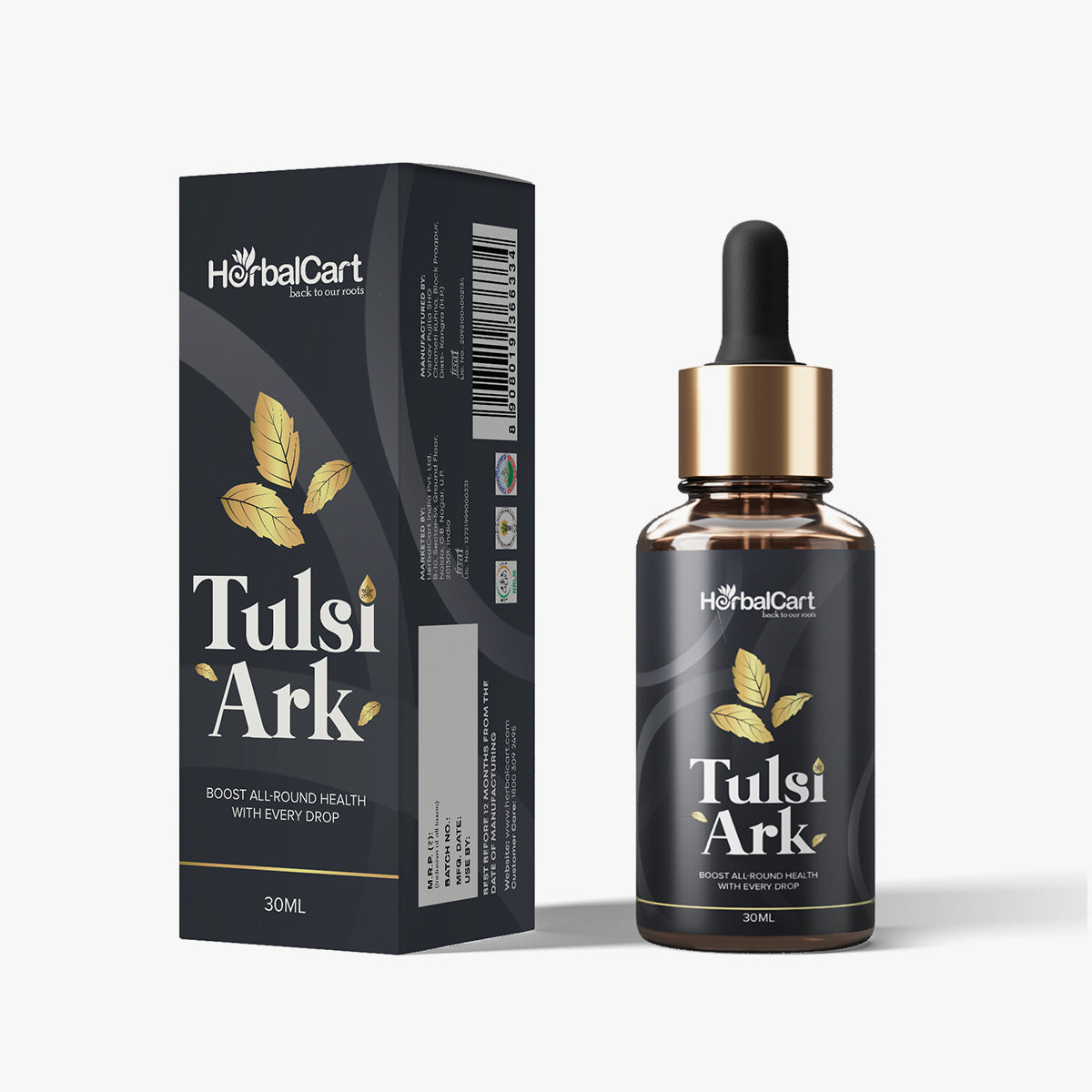
HerbalCart sells dietary supplements, including Tulsi Ark holy basil extract. Supplements are not meant to diagnose, treat, cure or prevent any condition.
Quick Stress Relief Techniques for Tense Moments
The six remedies above build long-term calm. Sometimes you need to know how to relieve stress quickly, before a meeting, after an argument or in the middle of a sleepless night. These stress relief techniques take only a few minutes and can be done almost anywhere.
Slow breathing
Breathe in through your nose for 4 seconds and out through your mouth for 6 seconds. Repeat for 2 to 5 minutes. A longer exhale signals your body that it is safe to relax. If you feel dizzy, breathe more gently and return to normal breathing.
The 5-4-3-2-1 grounding method
When your thoughts are racing, name 5 things you can see, 4 you can touch, 3 you can hear, 2 you can smell and 1 you can taste. It pulls your attention back to the present moment and is especially useful when stress and anxiety rise together.
Progressive muscle relaxation
Starting at your feet, tense a group of muscles for about 5 seconds and then release for 10 seconds. Move up through your legs, stomach, hands, shoulders and face. It helps you notice where you hold tension and what relaxation feels like.
A short walk or a change of scene
Even 5 to 10 minutes outside can clear your head. Leave your phone in your pocket if you can, and notice the sky, the trees or the people around you.
Write it down
Spend 5 minutes writing whatever is on your mind without editing. Getting worries onto paper often makes them feel smaller and easier to sort into what you can control and what you cannot.
Daily Habits That Support Stress Management
Quick fixes help in the moment, but steady habits lower your baseline stress. Three of them deserve special attention.
Protect your sleep
Stress and poor sleep feed each other. The CDC recommends at least 7 hours of sleep a night for adults. Keep a regular bedtime and wake time, make your bedroom cool, dark and quiet, and avoid screens for 30 to 60 minutes before bed. A calming ritual such as stretching, reading or a cup of caffeine-free tea tells your body that the day is over. If sleep problems last for weeks, speak with your doctor.
Plan your day
Much daily stress comes from feeling behind. Each morning, write down your top three priorities and tackle the most important one first. Break big tasks into small steps, take a short break every 60 to 90 minutes, and say no when your plate is already full.
Limit digital overload
A constant stream of news, messages and social media keeps your mind on alert. Turn off non-essential notifications, avoid checking your phone for the first 30 minutes after waking, and set screen-free times during the day.
Stress and Anxiety: What Is the Difference?
Stress and anxiety overlap, and many of the same tools help with both. Stress is usually a response to a specific outside pressure, such as a deadline, an argument or an exam, and it tends to fade when the situation passes. Anxiety is ongoing worry or fear that can continue even without a clear trigger. It often comes with restlessness, a racing heart or constant "what if" thoughts.
If worry is constant, hard to control and getting in the way of daily life, it may be an anxiety disorder. These conditions are common and very treatable, and natural remedies can work alongside therapy or medication but should not replace them if you need treatment.
When to See a Doctor for Stress and Anxiety
Natural remedies can support stress management, but they do not replace professional care. Please consult a doctor, therapist or counselor if:
- Stress or anxiety lasts for several weeks and is not improving
- It affects your sleep, appetite, work or relationships
- You have panic attacks or frequent physical symptoms you cannot explain
- You rely on alcohol or other substances to cope
- You feel hopeless or persistently down
Treatment may include talk therapy such as cognitive behavioral therapy (CBT), lifestyle changes and, for some people, medication prescribed by a doctor. A doctor can also check for medical causes of your symptoms, such as thyroid problems or anemia. Check with your doctor or pharmacist before taking any herbal supplement, especially if you take medicine, are pregnant or breastfeeding.
If you feel unsafe or are thinking about harming yourself, please contact your local emergency services or a crisis helpline in your area, and tell someone you trust.
Stress Management: Final Thoughts
Stress is not permanent because you can train yourself to channelize the energies acting against you. The trick is to live in the very present and look for the silver lining so that you're never enslaved by your situations.
Start small. Choose one or two remedies from this guide, such as five minutes of slow breathing and a daily walk, and practice them for a couple of weeks before adding more. Be patient with yourself, and remember that asking for help is a sign of strength. For a day-by-day routine, see our 7-day stress reset plan.
Disclaimer: This article is for information purposes only and is not a substitute for professional medical advice, diagnosis or treatment. Please consult your doctor before making changes to your diet, exercise routine or before using any herbal remedy or supplement, especially if you have a health condition, take medicine, or are pregnant or breastfeeding.