

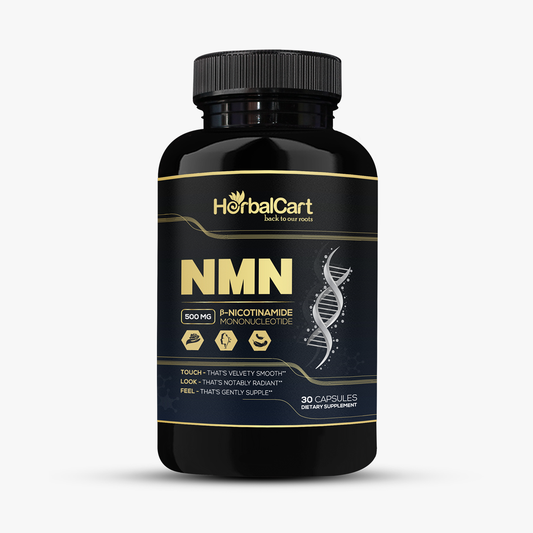

If you've been researching ways to support healthy aging, you've probably come across NMN (Nicotinamide Mononucleotide) — one of the most talked-about compounds in the longevity and cellular health space. But once you decide to try it, a new question pops up almost immediately: should you choose NMN powder or NMN capsules?
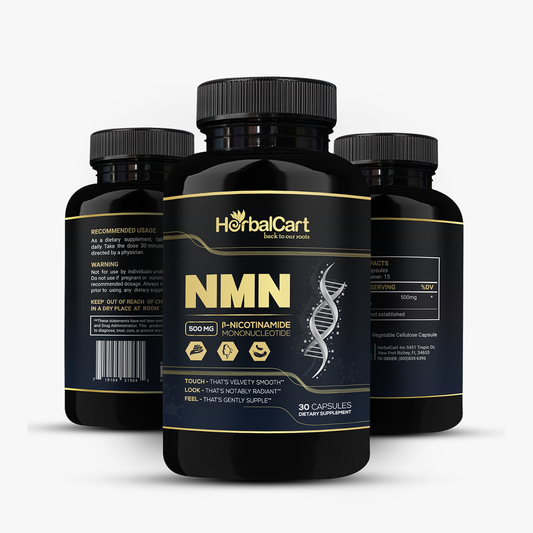
This is one of the most common questions health-conscious adults ask before buying their first bottle. The truth is, both forms deliver the same core ingredient — but they differ in absorption, convenience, dosage flexibility, taste, cost, and shelf stability. In this guide, we'll break down NMN powder vs capsules in detail so you can make an informed decision based on your lifestyle, goals, and experience level. If you'd like to see how a quality NMN supplement is typically formulated, it can help to have a reference point as you read through the comparison below.
This article is for educational purposes only and does not provide medical advice. Always speak with a licensed healthcare provider before starting any new supplement, especially if you have an existing health condition or take medication.
What Is NMN, and Why Does It Matter?
NMN (Nicotinamide Mononucleotide) is a molecule naturally found in small amounts in foods like broccoli, cabbage, edamame, and avocado. It's also produced inside the human body. NMN is a direct precursor to NAD+ (Nicotinamide Adenine Dinucleotide) — a coenzyme found in every living cell that plays a central role in energy metabolism, DNA repair, and overall cellular function.
As people age, NAD+ levels in the body naturally decline. Research scientists have been studying whether supplementing with NMN, as an NAD+ booster, may help support the body's natural NAD+ production process. This is why NMN has become a popular anti-aging supplement and a common ingredient in products marketed for cellular energy support.
It's important to note: NMN research is still evolving. While preliminary studies (mostly in animal models, with a growing number of human trials) are promising, NMN supplements are not approved to diagnose, treat, cure, or prevent any disease. This article focuses purely on comparing the powder and capsule forms — not on making health claims.
Beyond the science, there's also a lifestyle angle to consider. NAD+ isn't just a lab concept — it's tied to how energized you feel, how well your body recovers, and how your cells manage day-to-day wear and tear. That's part of why so many adults in their 30s, 40s, and 50s start looking into NAD+ support as part of a broader wellness routine, alongside things like exercise, sleep, and a balanced diet. NMN isn't a replacement for those fundamentals — it's typically viewed as a complementary addition to a wider set of human longevity tips that already form the foundation of an already health-conscious lifestyle.
Once someone decides to try NMN, the next step is choosing a format. That's where the powder vs. capsule debate comes in — and it's a bigger decision than most people expect. The format you choose can affect how easy it is to stick with your routine, how much you spend over time, and even how quickly your body may respond. Let's compare the two side by side.
NMN Powder vs Capsules: Quick Comparison Table
| Factor | NMN Powder | NMN Capsules |
|---|---|---|
| Absorption | Can be taken sublingually (under the tongue) for potentially faster absorption | Absorbed through the digestive system; slightly slower onset |
| Convenience | Requires measuring with a scale or scoop; less travel-friendly | Pre-measured, easy to carry, no prep needed |
| Dosage Flexibility | Fully adjustable — increase or decrease dose in small increments | Fixed dosage per capsule; less flexible |
| Taste | Slightly bitter or chalky; some find it unpleasant | Tasteless — capsule shell masks the powder |
| Cost | Generally more cost-effective per gram | Typically higher cost due to encapsulation and packaging |
| Stability/Shelf Life | More sensitive to moisture and air exposure once opened | Better protected from oxidation and humidity |
| Best For | Advanced users who want precise dosing control | Beginners who want simplicity and consistency |
This table highlights the core trade-offs in the NMN powder vs capsules decision — but let's dig deeper into each factor so you understand exactly why it matters.
How NMN Supports NAD+ Production and Cellular Energy
To understand why form even matters, it helps to understand what NMN does inside the body.
- Conversion process: Once ingested, NMN is transported into cells, where enzymes convert it into NAD+.
- Role of NAD+: NAD+ acts as a coenzyme required by hundreds of biological processes, including mitochondrial energy production (the "powerhouse" of the cell), DNA repair mechanisms, and the activity of sirtuins — proteins linked to cellular resilience and aging pathways.
- Decline with age: Research suggests NAD+ levels can drop significantly between young adulthood and older age, which scientists believe may be connected to reduced cellular energy support and slower repair processes.
- Why supplementation is studied: Because NAD+ itself is a large molecule that doesn't cross cell membranes efficiently, researchers have focused on smaller precursor molecules like NMN, which the body can more easily absorb and convert.
This is the science-backed rationale behind NMN's popularity as an NAD+ booster. However, the delivery method — powder or capsule — can influence how quickly and efficiently the compound reaches the bloodstream, which is why the NMN powder vs capsules comparison isn't just about personal preference; it can also affect how the supplement performs for you.
It's worth noting that the human body's ability to absorb NMN can also depend on factors like individual metabolism, gut health, and whether the supplement is taken with or without food. This is why some people report noticing a difference between forms, while others don't notice much difference at all. Because research on absorption rates in humans is still limited compared to animal studies, it's reasonable to treat both powder and capsule forms as reasonable options — the "best" one is often the one that fits your lifestyle and that you'll actually take consistently.
Consistency, in fact, may matter more than the small theoretical absorption edge that sublingual powder offers. A capsule taken every single day is likely to have more real-world impact than a powder that gets skipped because measuring it feels like a chore. This is one of the most overlooked points in the NMN powder vs capsules conversation — the "better" product is often simply the one you'll stick with long-term.
Pros and Cons of NMN Powder
Pros
- Faster potential absorption: When taken sublingually, powder may bypass some digestive breakdown, allowing it to enter the bloodstream more directly.
- Custom dosing: You can start with a small "micro-dose" and gradually increase, which is ideal for people who want to fine-tune their intake.
- Cost-efficient: Powder typically costs less per milligram since there's no encapsulation process.
- Versatile use: Can be mixed into water, or taken directly under the tongue.
Cons
- Taste: Many users describe NMN powder as slightly bitter or sour, which isn't pleasant for everyone.
- Measuring hassle: Requires a milligram scale or scoop for accurate dosing — eyeballing it can lead to inconsistent intake.
- Less travel-friendly: Powder containers can spill, and TSA/travel rules around loose powders can be inconvenient.
- Oxidation risk: Once opened, powder is more exposed to air and moisture, which may degrade potency faster if not stored properly (airtight, cool, dry place).
Pros and Cons of NMN Capsules
Pros
- Convenience: Pre-measured doses mean no scooping, no scale, no mess — just swallow and go.
- Consistent dosing: Every capsule contains the same amount, reducing the risk of over- or under-dosing.
- Tasteless: The capsule shell (often vegetable-based) eliminates the bitter taste associated with raw powder.
- Better shelf stability: Capsules protect the NMN from air and light exposure, which may help preserve potency over time.
- Travel-friendly: Easy to pack, carry, and take on the go.
Cons
- Higher cost: Encapsulation and packaging add to the price per dose.
- Slower onset: Capsules must dissolve and pass through the digestive system, which may take longer than sublingual powder.
- Less flexible dosing: You're limited to whole-capsule increments (e.g., 250mg or 500mg per capsule), making it harder to fine-tune your intake.
Which Form Is Better: Beginners vs Advanced Users?
For Beginners
If you're new to NMN, capsules are generally the easier starting point. They take the guesswork out of dosing, require no equipment, and have no taste to adjust to. This makes it simpler to build a consistent daily habit — which matters more than the small absorption differences when you're just getting started.
For Advanced or Experienced Users
Those who are already familiar with NMN, or who want more control over timing and dosage (for example, splitting doses throughout the day or adjusting based on personal response), often prefer powder. It allows for more precise experimentation, and the cost savings become more meaningful for people using higher doses over the long term.
In short, the NMN powder vs capsules decision often comes down to experience level: capsules for simplicity and consistency, powder for flexibility and control.
There's also a middle path many people take: starting with capsules to build the habit, then transitioning to powder once they're comfortable with dosing and want more control or better cost efficiency for higher, longer-term use. This gradual approach can be a practical way to ease into a routine without feeling overwhelmed by scales, scoops, or unfamiliar measurements right out of the gate.
Your lifestyle also plays a role. Frequent travelers, busy professionals, and anyone who values a grab-and-go routine tend to lean toward capsules simply because they eliminate friction. On the other hand, people who enjoy tracking and optimizing their supplement stack — perhaps alongside other longevity-focused habits like intermittent fasting, resistance training, or sleep tracking — often gravitate toward powder because it fits naturally into a more hands-on, data-driven approach to health.
Best Time and Way to Take NMN
While individual routines vary, here are general, commonly discussed practices among NMN users (again, this is informational, not medical guidance). For a deeper dive into timing strategies, our guide on the best time to take an NMN supplement covers this in more detail:
- Morning intake: Many people take NMN in the morning on an empty stomach, based on the idea that NAD+ activity may align with the body's natural circadian rhythm.
- Sublingual powder: If using powder, holding it under the tongue for 30–60 seconds before swallowing is a common method believed to support faster absorption.
- With capsules: Simply take with a glass of water, typically with or shortly after a light breakfast to minimize any digestive sensitivity.
- Consistency matters: Whether you choose powder or capsules, taking it at the same time each day may help you track how your body responds and maintain a steady routine.
- Storage tip: Keep NMN (powder especially) in a cool, dry place, tightly sealed, and away from direct sunlight to help preserve potency.
- Timing and sleep: Some users wonder whether NMN affects sleep quality if taken later in the day. If this is a concern for you, our guide on NMN and sleep explains what's currently understood about the relationship between timing and rest.
Always follow the dosage instructions provided by the specific product manufacturer, and consult a healthcare professional to determine what may be appropriate for your individual situation.
A Few Extra Tips for Getting the Most Out of Either Form
- Start low, go slow: Whether you choose powder or capsules, it's generally wise to begin with a lower amount and observe how your body responds before considering any increase.
- Pair with hydration: Drinking water alongside your NMN, especially with capsules, can support digestion and comfort.
- Track your routine: Keeping a simple log of when and how much you take can help you notice patterns over time, especially if you're experimenting with timing or dosage.
- Choose third-party tested products: Regardless of form, look for brands that provide certificates of analysis (COAs) from independent labs. This is especially important for a NAD+ booster like NMN, where product purity and accurate labeling can vary significantly between manufacturers.
- Be patient: Cellular processes take time. Many users don't expect immediate, dramatic effects and instead view NMN as a long-term addition to their wellness routine rather than a quick fix.
- Mind your diet: Supplementation works best alongside supportive daily habits. It may help to know which top foods for an anti-aging diet to include, and just as importantly, which worst foods for anti-aging to limit or avoid alongside your NMN routine.
Conclusion: Powder or Capsules — Which Should You Choose?
When comparing NMN powder vs capsules, there's no single "better" option — the right choice depends on your priorities, experience level, and daily routine.
- Choose NMN powder if you want dosage flexibility, a lower cost per gram, and don't mind measuring your own servings or a slightly bitter taste.
- Choose NMN capsules if you value convenience, consistent dosing, easy travel, and a tasteless, no-fuss experience — especially if you're just starting out.
Both forms deliver the same core compound and are commonly used as part of a broader approach to supporting cellular energy support and overall wellness routines. As with any supplement, especially in the fast-evolving longevity space, it's worth choosing a reputable brand that offers third-party testing and transparent sourcing.
Before adding NMN — in either form — to your daily routine, talk to your doctor or a qualified healthcare professional, particularly if you're managing a health condition, are pregnant or nursing, or take other medications. This article is intended for general informational purposes only and should not replace professional medical advice.
Ultimately, whether you choose NMN powder or capsules, the most important factor is consistency — and finding the form that fits naturally into your everyday life.